Death is Not the End Part 1: The Evidence
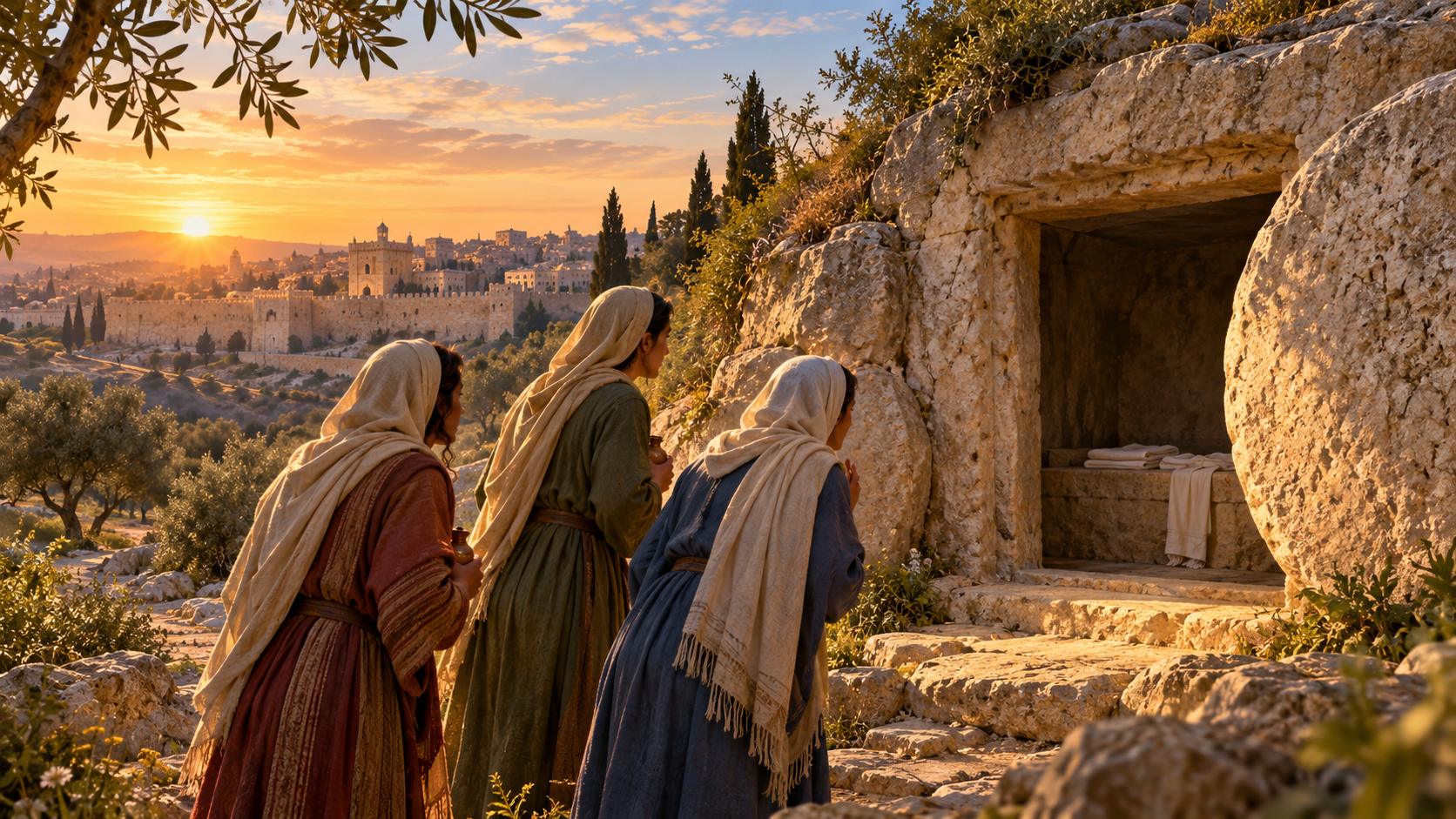
Everyone dies. But does death have the final word? Christianity answers that question with a startling claim: Jesus of Nazareth died, was buried, and rose bodily from the dead. If that happened, the implications reach far beyond one man's life. They concern our own future.
You don't have to accept the Bible as God's Word before examining this claim. You can begin by asking the questions you would ask about any ancient event: What do the sources report? How early are they? Did the writers know the people involved? What evidence supports their accounts?
Christians see evidence of a Creator in nature. The resurrection raises a further question: Has that Creator acted in human history? Science investigates the natural world, including traces of past events. Historians examine documents and other surviving evidence to reconstruct what happened. Neither approach requires us to abandon reason when we encounter an unfamiliar claim.
The resurrection matters because Christianity stakes its central promises on it. Paul acknowledged this plainly: if Christ has not been raised, Christian faith is worthless, believers remain in their sins, and their hope is misplaced (1 Corinthians 15:17–19). If Jesus rose, however, we all have grounds to trust His claims, His promise of forgiveness, and His assurance of our own future resurrection.
So, what does the historical evidence tell us?
How to weigh the evidence
Historians rarely reach mathematical certainty. They compare explanations and ask which best accounts for the available evidence. Five considerations help us evaluate the resurrection accounts.
Agreement among independent sources strengthens the claim. "Independent" means the sources do not rely on each other. For example, if one person sees a crime and tells a friend, the witness is an independent source, but the friend is not.
Confirmation from an unfriendly source can carry particular weight. A critic has little reason to invent evidence that helps the opposing side.
Statements that are embarrassing or disadvantageous to the author's cause tend to be truthful. People rarely invent stories that make themselves look bad or undermine their credibility.
Testimony from people close to the events deserves attention. We still need to assess what they knew and how their testimony reached us.
Early reports leave less time for a story to develop into legend. Early testimony can be mistaken, but it brings us closer to the people and circumstances involved.
With those considerations in mind, let's examine five central claims that together form the historical case for the resurrection.
Claim 1: Jesus Died by Crucifixion
All four Gospels report that Roman authorities crucified Jesus under Pontius Pilate. Mark adds that Pilate checked with a centurion before releasing the body for burial (Mark 15:44–45).
Crucifixion was a brutal public execution. Scourging, blood loss, exposure, and the strain of hanging on a cross could combine to kill the victim. The Gospel descriptions fit the general setting of Roman execution practices.
Christian writers aren't our only sources. Around AD 116, the Roman historian Tacitus refers to Jesus' crucifixion. He calls it an "extreme penalty" that took place during the reign of Tiberius and under the rule of Pontius Pilate. Tacitus wrote with hostility toward Christians, making his testimony particularly relevant. The Jewish historian Josephus also reports Jesus' condemnation by Pilate. The surviving passage contains wording widely regarded as later Christian additions, so it requires careful handling. Nevertheless, it remains part of the discussion of non-Christian evidence for Jesus' execution.
Other writings add supporting, though less direct, testimony. Lucian mocked Christians for worshiping a man crucified in Palestine. Mara Bar-Serapion referred to the execution of the Jews' “wise king,” often understood as an allusion to Jesus. A later passage in the Babylonian Talmud describes the execution of Yeshu near Passover; its date and interpretation make it a more complicated source.
The convergence of evidence explains why outspoken atheist and Bible scholar Bart Ehrman says Jesus’ execution under Pontius Pilate is among the most secure facts we have about his life, and why Gerd Lüdemann, a prominent New Testament scholar and atheist, concludes that Jesus’ death by crucifixion is “indisputable.”
Claim 2: Jesus Was Buried and the Tomb Was Found Empty
The Gospels identify Joseph of Arimathea, a respected member of the Jewish council, as the man who arranged Jesus' burial. They describe a rock-cut tomb closed by a stone, a setting consistent with burial practices of the period. That consistency supports the account's historical reliability. Joseph was a well-known public figure in Jerusalem. If the burial had been fabricated, he (or his peers) could have publicly denied it.
All four Gospels report that women, including Mary Magdalene, were the first to discover the empty tomb. The women matter. In first-century Jewish culture, female testimony was not considered reliable in court. Making them the first witnesses would have been a poor choice for someone inventing a persuasive public story. This gives historians a reason to take the tradition seriously.
The location matters too. The Christian movement proclaimed the resurrection in Jerusalem, where Jesus had died and, according to the accounts, had been buried. An identifiable body could have challenged that proclamation. Our surviving sources record no successful production of Jesus' body to refute the resurrection proclamation.
Matthew records a competing explanation: the disciples stole the body (Matthew 28:11–15). Later Christian writers, including Justin Martyr, Tertullian, and Origen, also discuss versions of this accusation. A theft explanation assumes a missing body. These Christian accounts of the competing explanation add support to the empty-tomb argument.
Paul's early summary says Jesus was buried and raised on the third day (1 Corinthians 15:3–4). Christians understand this as bodily resurrection, consistent with an empty tomb.
The empty tomb deserves serious consideration. It does not, by itself, establish a resurrection, but it’s a crucial link in the chain of evidence—crucifixion, death, burial, and the empty tomb—that together point to the resurrection.
Claim 3: The Disciples Believed They Saw the Risen Jesus
The claim that Jesus’ disciples genuinely believed he rose from the dead is one of the strongest historical facts surrounding the resurrection. The Gospels describe encounters involving both individuals and groups: Mary Magdalene, other women, two followers on the road to Emmaus, Peter, and gatherings of disciples. They also describe appearances by the Sea of Galilee and on a mountain in Galilee. Acts reports appearances over forty days (Acts 1:3).
Paul supplies especially important early testimony. In 1 Corinthians 15:3–8, he passes on a tradition that Jesus died, was buried, was raised, and appeared to Peter and the Twelve. He also reports appearances to more than five hundred people, to James, to the apostles, and finally to himself.
The tradition Paul received predates his letter. Many scholars place its origins within the earliest years of the Christian movement. Paul also personally met Peter and James (Galatians 1:18–19), giving him direct contact with central figures in the account.
This makes it difficult to explain resurrection belief as a story invented centuries later. It belonged to Christianity's earliest proclamation.
The disciples' behavior adds another consideration. The Gospels portray them abandoning Jesus, fearing arrest, and initially doubting reports of his resurrection. A crucified Messiah shattered their hopes. Yet they subsequently proclaimed that God had raised him, even when doing so brought threats, imprisonment, beatings, and martyrdom. How do we account for this dramatic behavior change?
Early Christian writers reinforce the picture. Clement of Rome discusses apostolic suffering. Ignatius emphasizes Jesus' bodily resurrection. Polycarp preserves the same faith, and Irenaeus connects Polycarp with the apostolic generation. These writers show the continuity of resurrection belief.
Acts and early Christian writings describe witnesses enduring threats, beatings, imprisonment, and, in some cases, death. Although later martyrdom traditions vary, the evidence for costly, persistent conviction is strong.
People can suffer for a mistaken belief. Their courage does not prove that Jesus rose. But it supports their sincerity and makes a deliberate conspiracy harder to explain. These were people claiming encounters, not simply defending a story they had heard generations later.
Claim 4: Paul Changed From Persecutor to Preacher
Paul wasn't a disappointed disciple hoping Jesus would return. He opposed the movement. In his own letters, he acknowledges viciously persecuting the church (Galatians 1:13).
Then he changed sides. Acts describes an encounter on the road to Damascus: a brilliant light, Jesus speaking to him, temporary blindness, and his subsequent baptism. Paul himself gives the central explanation: he had seen Jesus (1 Corinthians 9:1; 15:8).
His conversion carried a considerable cost. He exchanged his campaign against Christians for a life marked by beatings, imprisonment, danger, and hardship, which he describes in 2 Corinthians 11:23–29. Early Christian tradition also associates his death with persecution and execution in Rome.
Whatever explanation we favor, it must account for a radical opponent becoming a committed advocate. Paul's testimony supplies evidence from someone who had strong reasons to resist the Christian claim. His changed life supports the conclusion that he sincerely believed he had encountered the risen Jesus.
Claim 5: James Changed From Skeptic to Church Leader
James offers another revealing case. The Gospels identify him as Jesus' brother, and John says Jesus' brothers did not believe in him during his ministry (John 7:5).
Later, James became a leading figure in the Jerusalem church. Paul identifies him as Jesus' brother and describes meeting him. Acts portrays him helping guide the Jerusalem council. What accounts for that change?
Paul reports that Jesus appeared to James (1 Corinthians 15:7). His movement from unbelief to leadership fits the encounter Paul reports. Someone who had doubted Jesus during his ministry now helped lead the church that proclaimed his resurrection.
Josephus reports that the high priest Ananus arranged James's execution by stoning, providing important non-Christian evidence for his death. Later Christian accounts connect his martyrdom with his allegiance to Jesus.
James's story strengthens the cumulative case: a member of Jesus' own family, initially unbelieving, became a leader of the movement that proclaimed him risen.
What Explains the Whole Picture
The argument rests on the evidence taken together: Jesus' death, the reported empty tomb, early claims of appearances, the disciples' costly conviction, and the transformations of Paul and James.
The argument's strength comes from weighing all the evidence. An explanation must address the whole picture, including testimony from followers, enemies, a radical opponent, and a skeptical family member.
An empty tomb alone would leave questions unanswered. Sincere conviction alone would not establish that Jesus rose. Together with early appearance reports and the transformations of Paul and James, however, they form a substantial historical case. The Christian explanation is that these people encountered Jesus alive because he had actually risen from the dead. That explanation accounts for the combined evidence, rather than addressing each piece in isolation.
Clearly, the disciples, Paul, and James sincerely believed they had witnessed a risen Christ. But were they deceived, hallucinating, lying? Or did they really meet the risen Christ? That is where we turn next. For now, the pattern is hard to miss. Something happened that turned frightened followers into fearless witnesses, skeptics into martyrs, and a carpenter’s death into the world’s largest faith.
If Jesus defeated death, our hope for life beyond the grave has a historical foundation. The invitation is to examine that foundation and decide whether it deserves your trust. Complete your search and find the final answer in Death is not the End Part 2: The Verdict, which will be posted on October 25th.
Note: Part 1 and Part 2 are short summaries drawn from Beyond Chance: From the Big Bang to the Empty Tomb, Chapters 12 & 13.
